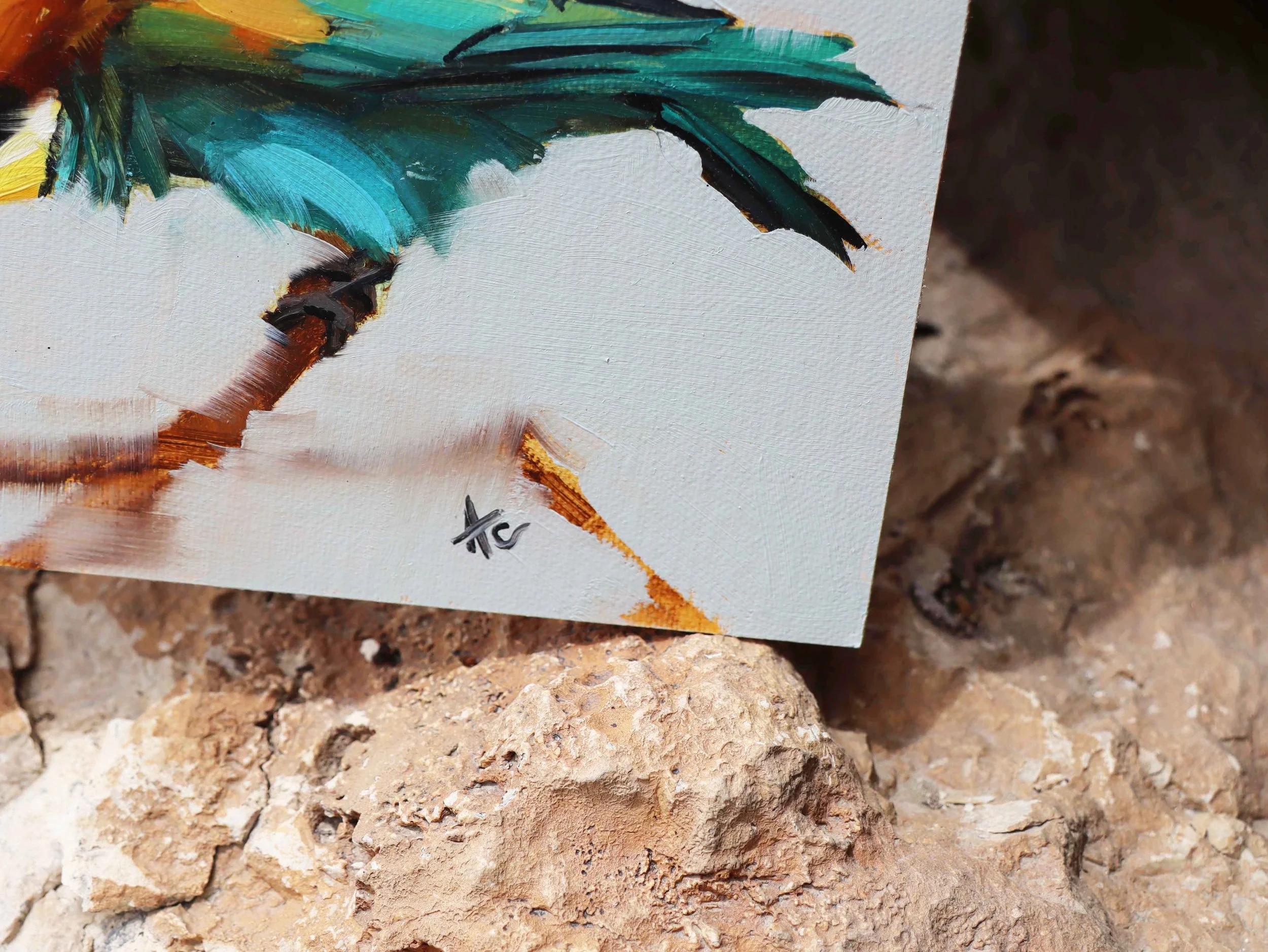
Cliffs and Turquoise
Painting the Secret Life of Bee-Eaters
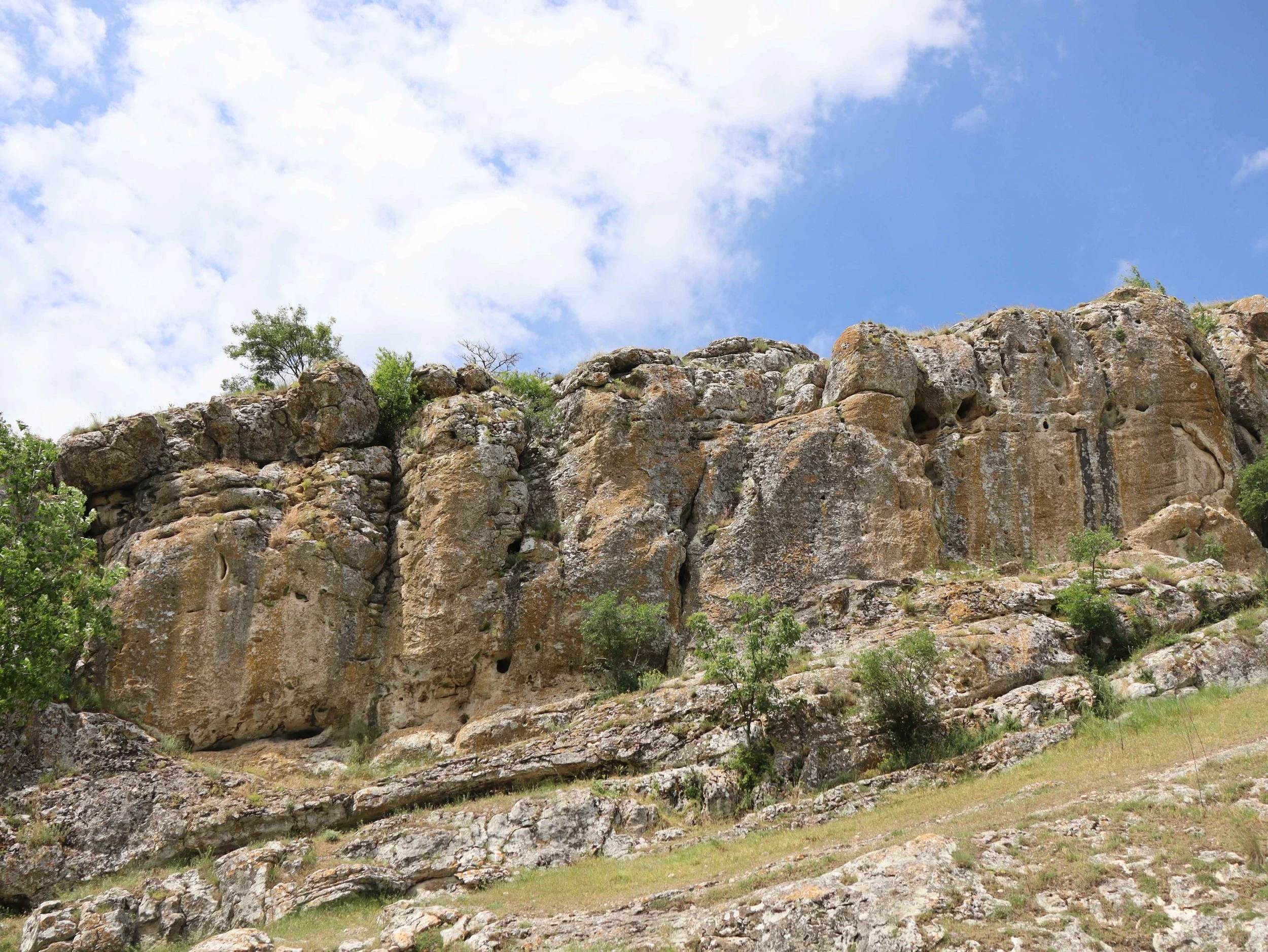
Dobrogea Gorges Natural Reserve
Nature does not reveal herself to just anyone. She demands silence, solitude, and a total willingness to dissolve into the landscape as a mere observer. For me, as a traditional oil painter, every canvas begins long before the brush touches the fabric. It starts in those moments of complete isolation in the heart of the wild, where the noise of the modern world fades to make room for true life.
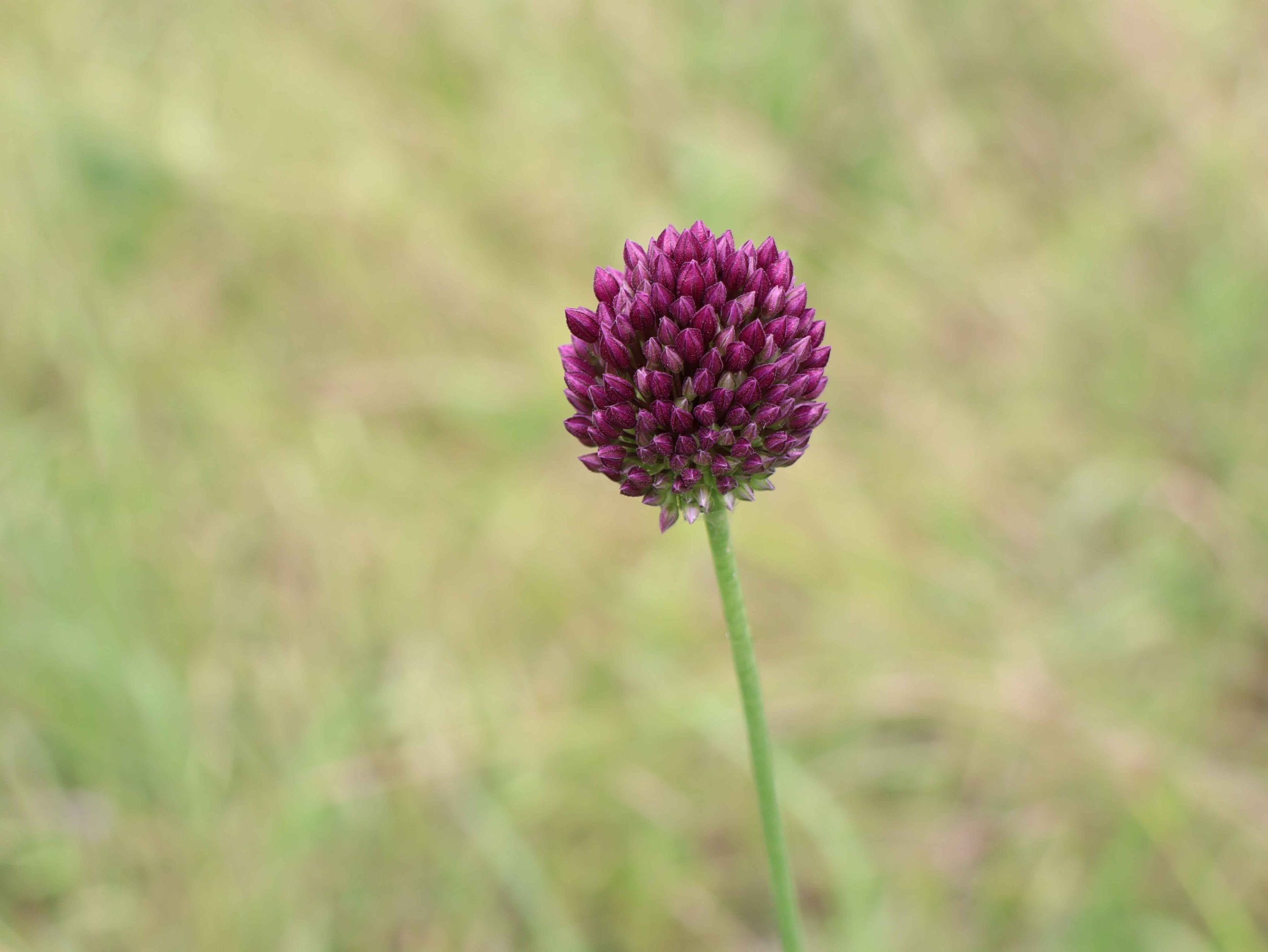
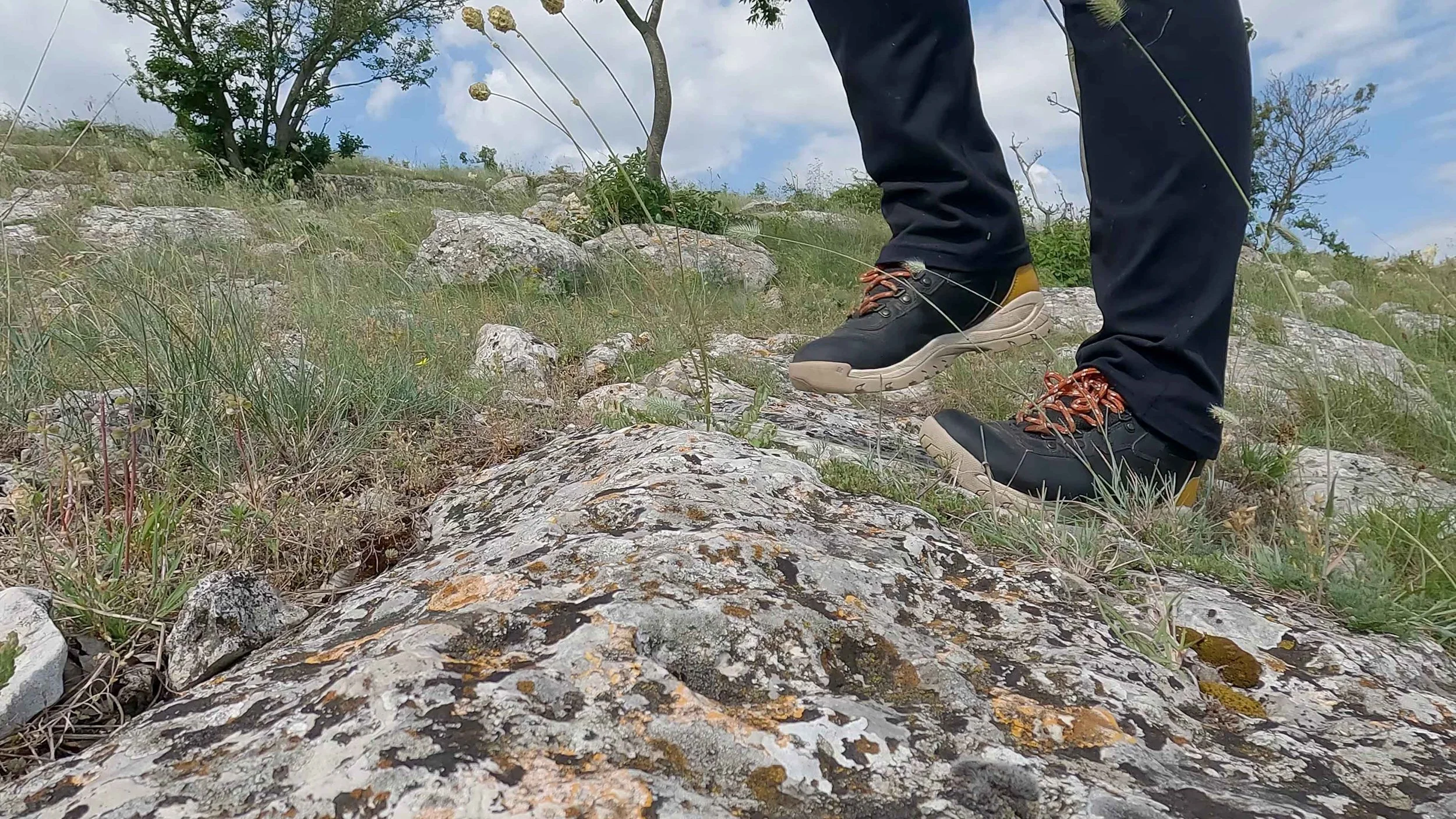
Recently, my steps guided me to a remote, arid corner: a relief sculpted in rock and sun-baked earth. There, on those steep, seemingly lifeless cliffs, I witnessed a breathtaking spectacle: the dance and grace of European bee-eaters (Merops apiaster).
The Biology of a Winged Jewel
The bee-eater is, without a doubt, one of the most spectacular and colorful birds in our fauna. Although they look as if they belong to an exotic paradise, these migratory creatures find their home right here, in clay banks and arid rocks. They are master hunters, feeding almost exclusively on insects caught mid-air: particularly bees and wasps, which they capture with surgical precision.
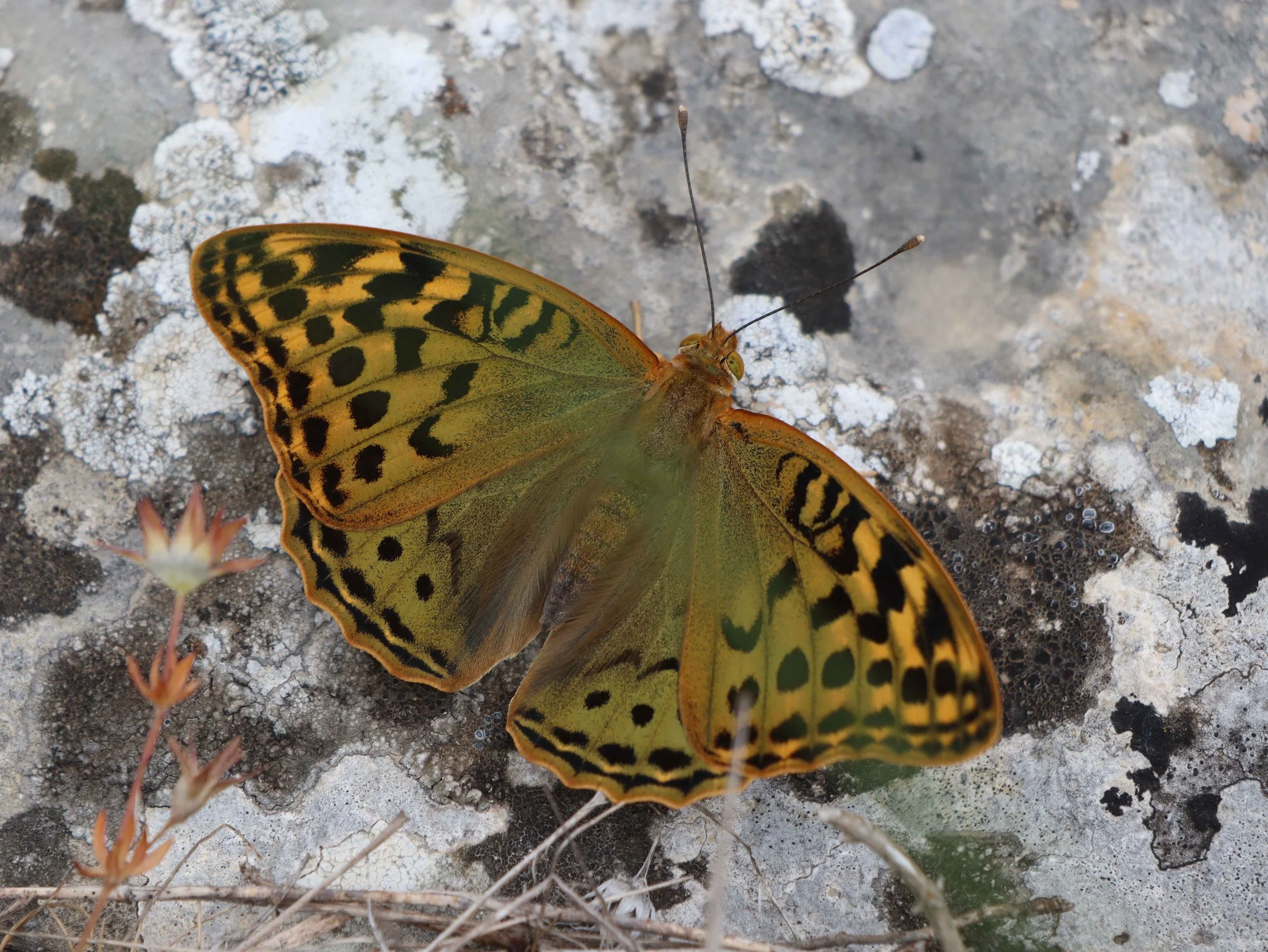
Argynnis pandora - Pandora Butterfly
Yet, what fascinates me most about bee-eaters is their intense social life. They live in colonies, dig deep tunnels into the clay cliffs to protect their young, and communicate constantly through a melodious, metallic warble that fills the warm air around the rocks.
Six Bee-Eaters on a Backdrop of Pure Light: The Alla Prima Challenge
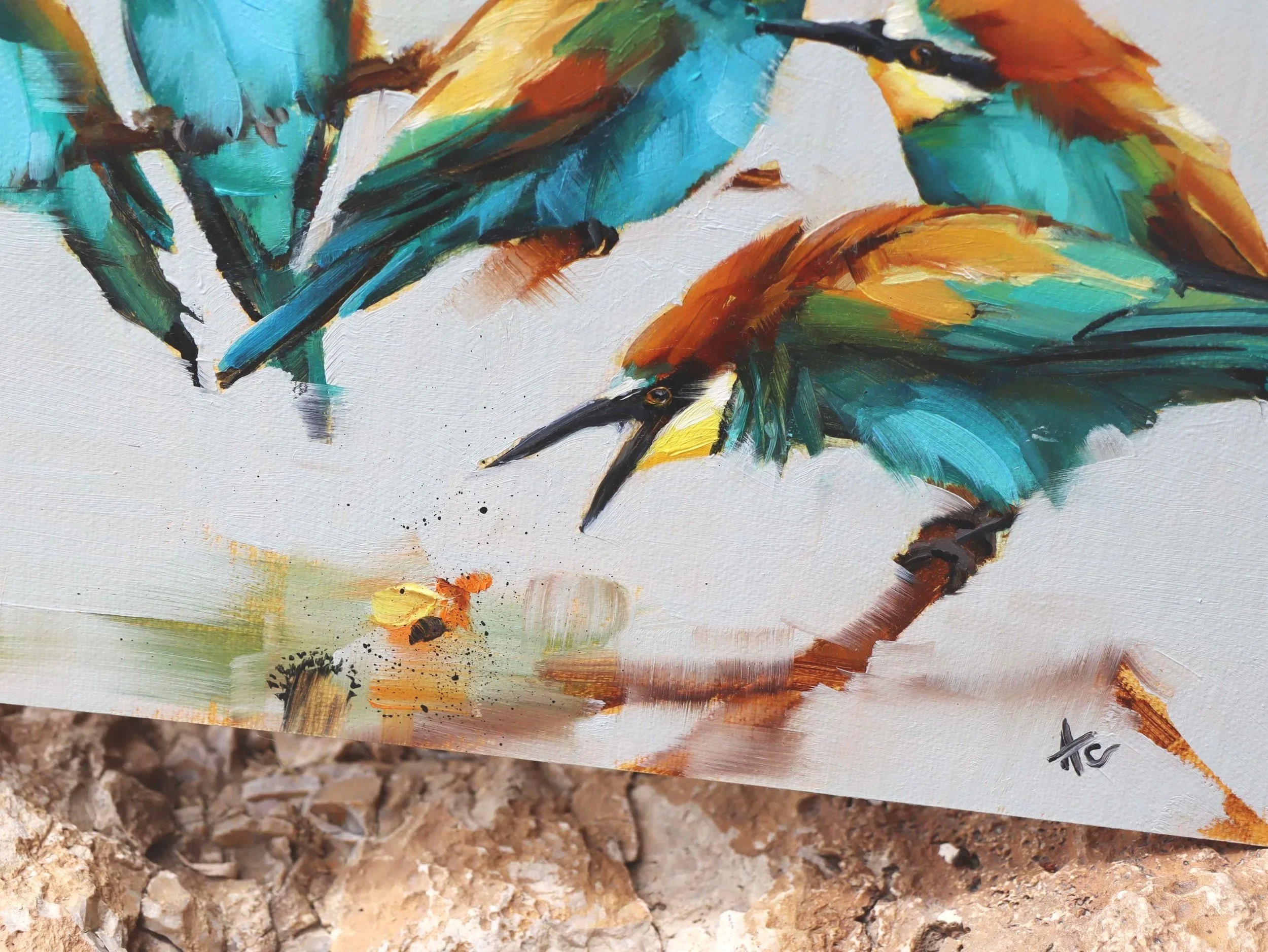
My latest oil painting brings together six bee-eaters, naturally grouped on slender branches. I chose to place them against a light, luminous, almost ethereal background. This minimalist backdrop is intentional; it serves to isolate the essence of the birds, emphasizing the contrast between their vibrant plumage and the fragility of the twigs they perch on.
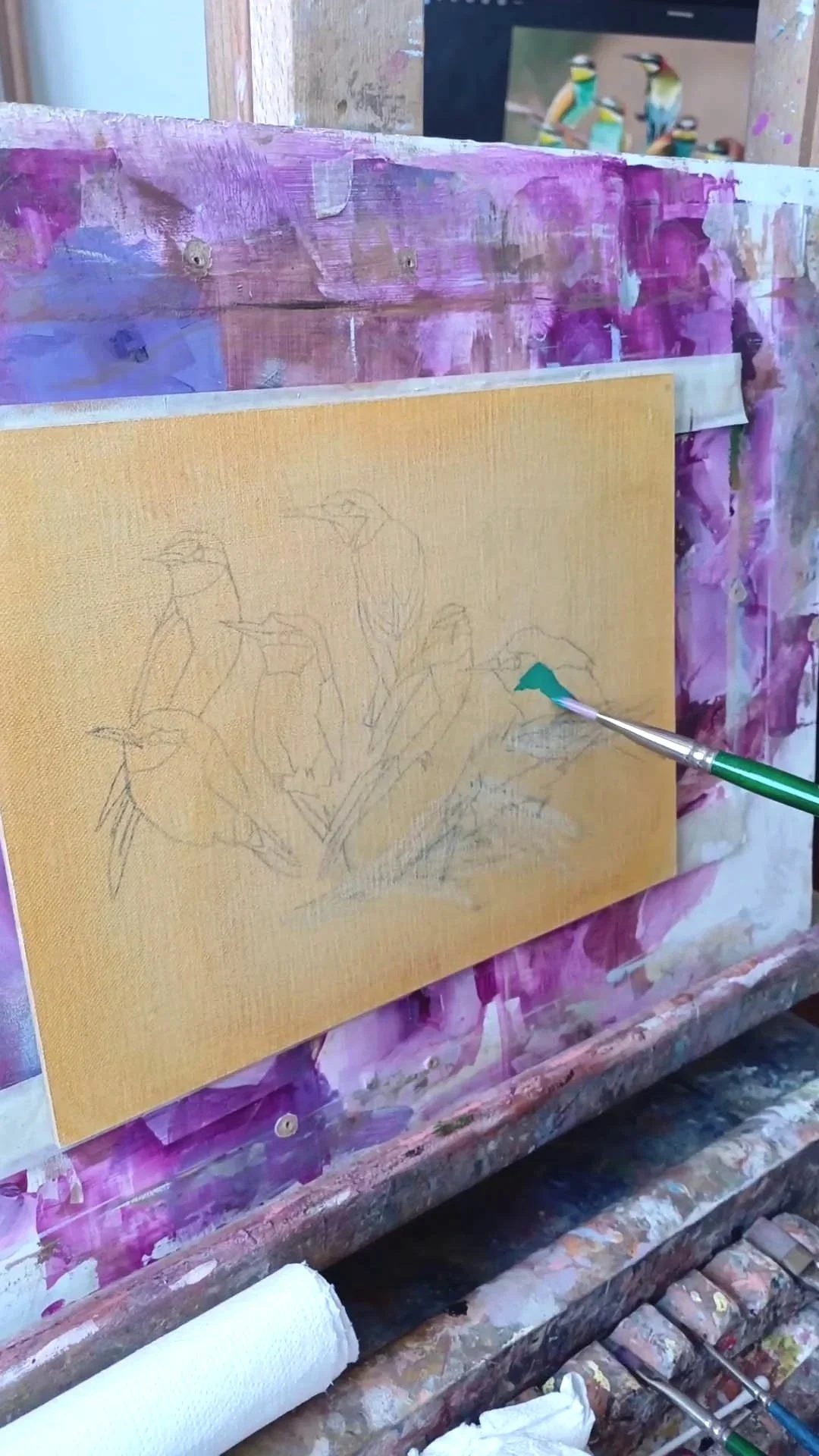
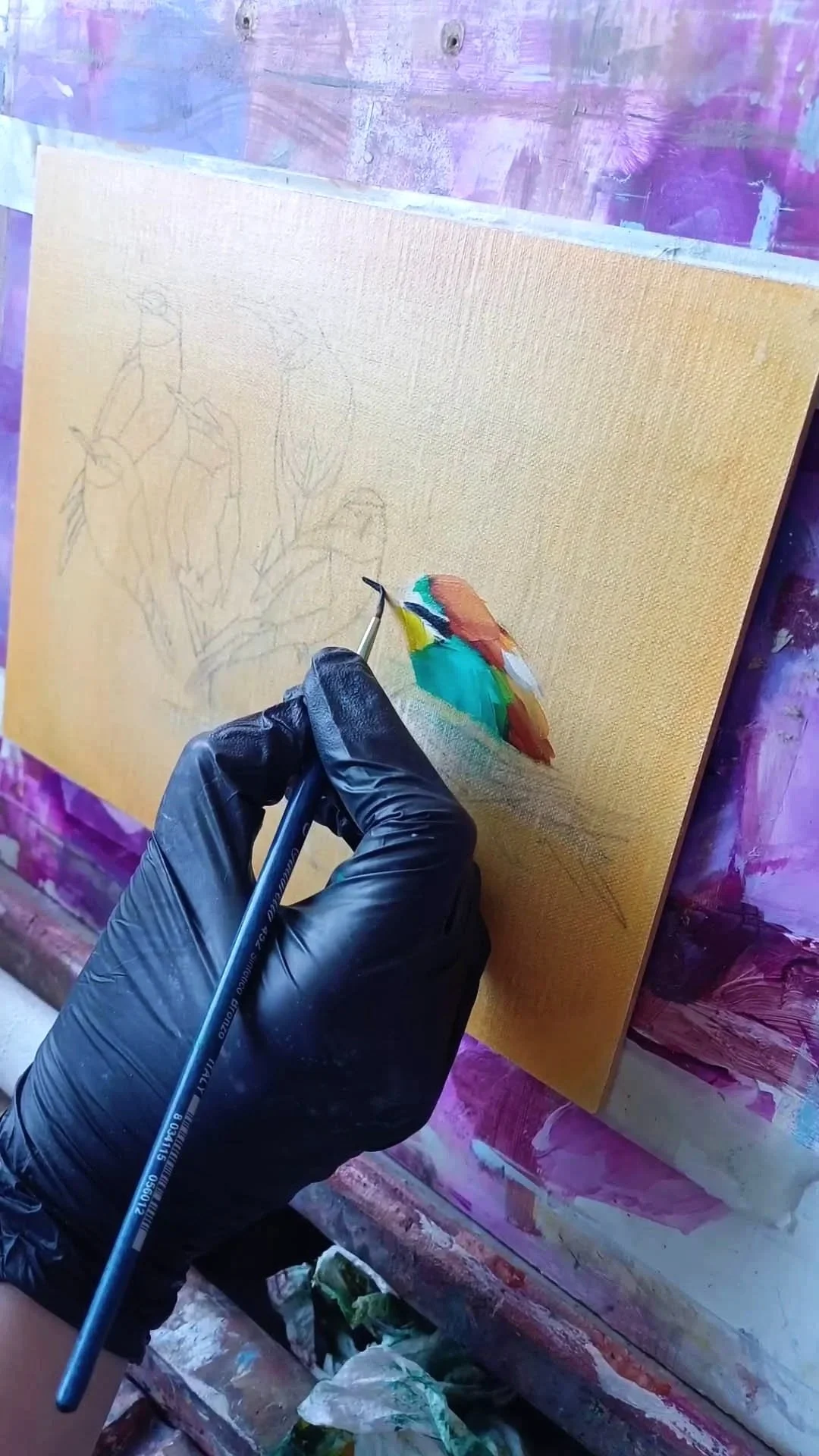
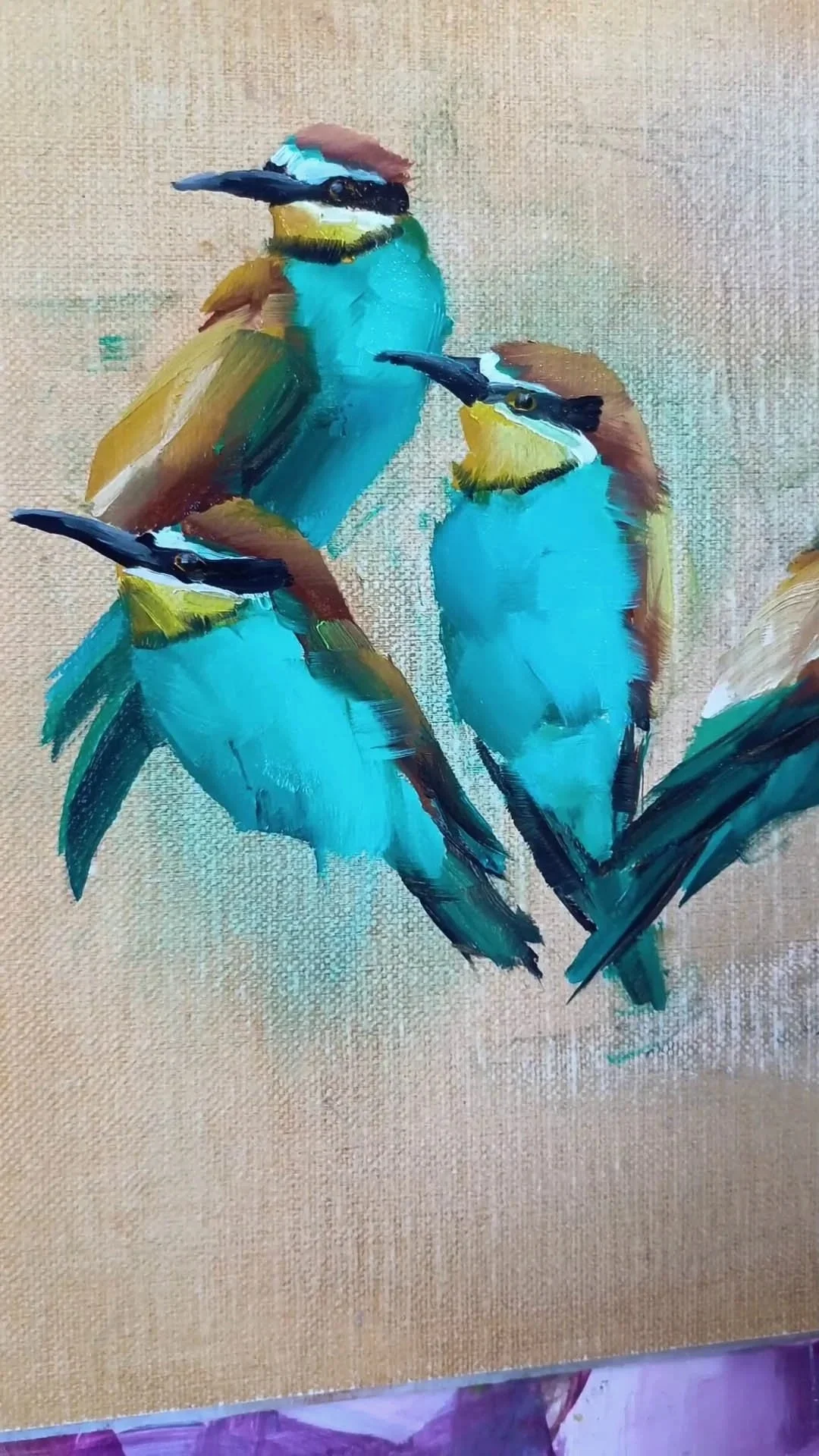
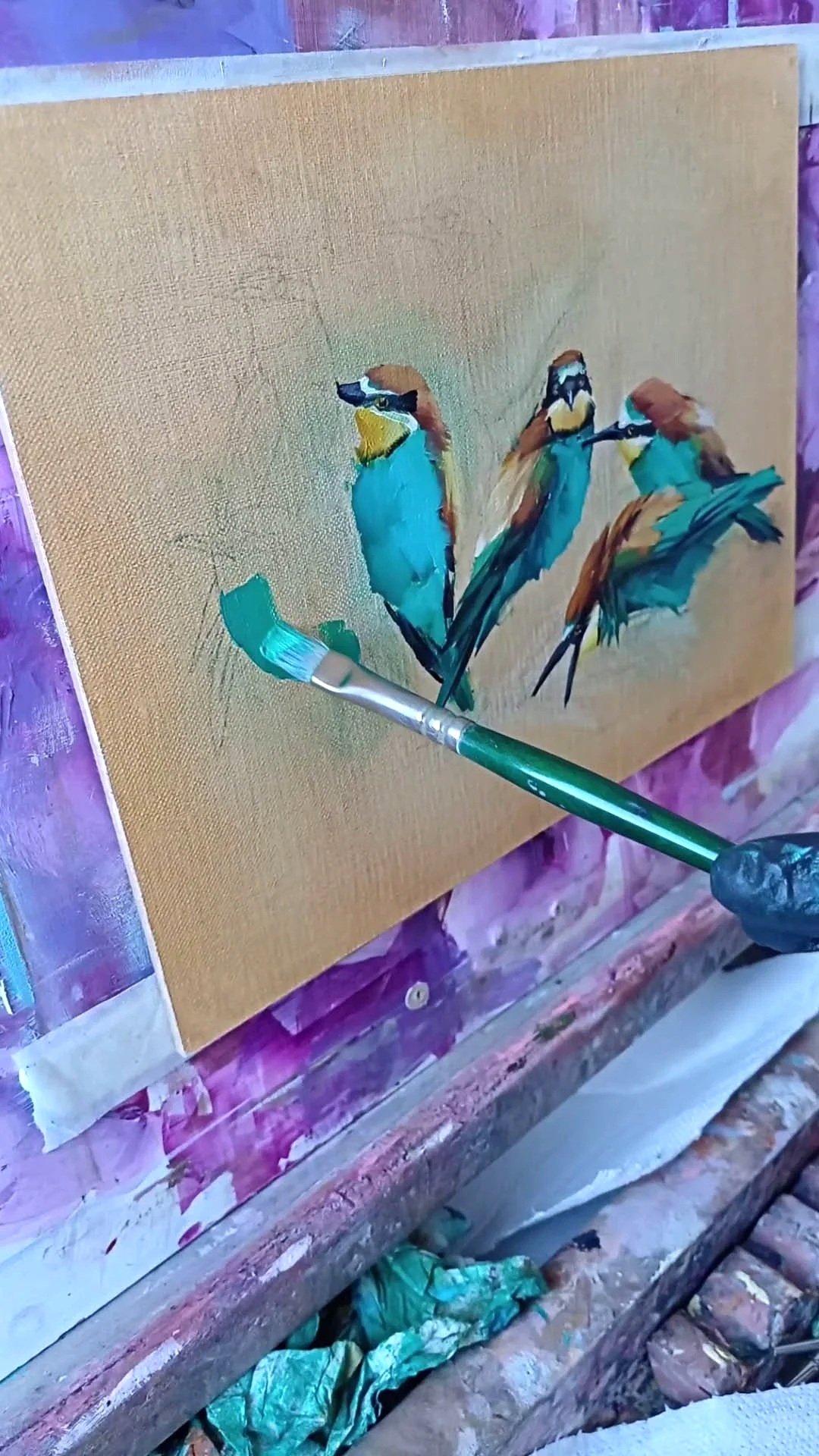
To capture the fleeting energy of these birds, I executed the entire piece using the alla prima (wet-on-wet) technique. Painting alla prima requires absolute decisiveness. Because the paint layers remain completely wet throughout the session, every single brushstroke must be deliberate and final.
The Plumage: To prevent the vibrant colors of the plumage (the rich turquoises, golden-yellows, and deep rusts) from muddying into the wet background, I used a high-load pigment application. I carefully placed crisp, unblended strokes of pure oil paint directly over the wet base.
The Details: The sharp bills and intense eyes of the six birds were rendered with precise, rapid linework using fine sable liners, cutting through the thick paint layers to anchor the birds to their anatomy.
The Backdrop: I laid down the bright, luminous background using large, sweeping strokes with a soft texture.
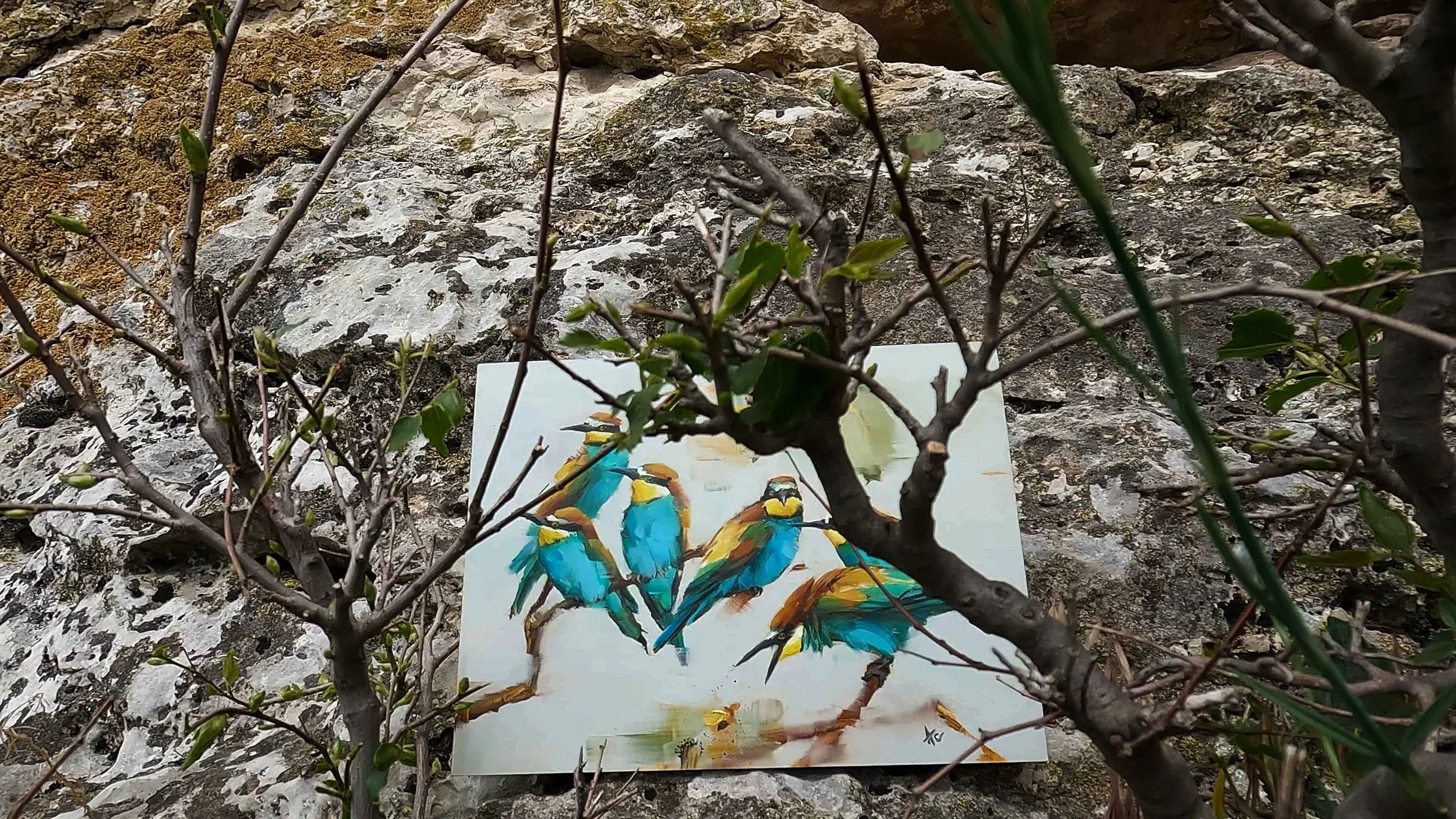
The grouping of the six birds reflects their social biology: that sense of community and mutual support I observed in the wild. At the same time, the number six carries a profound symbolism: it represents harmony, balance, and the perfect connection between the earthly and the celestial.
The Mystery of Connection and the Photoshoot on the Cliffs
For me, the act of painting is a form of mystical immersion. When I venture alone into nature, I seek to understand not just the shape of the bird, but the spirit of the place it inhabits. There is a deep mystery in how such a precious, richly colored creature chooses to build its life in the most arid and unforgiving landscapes.
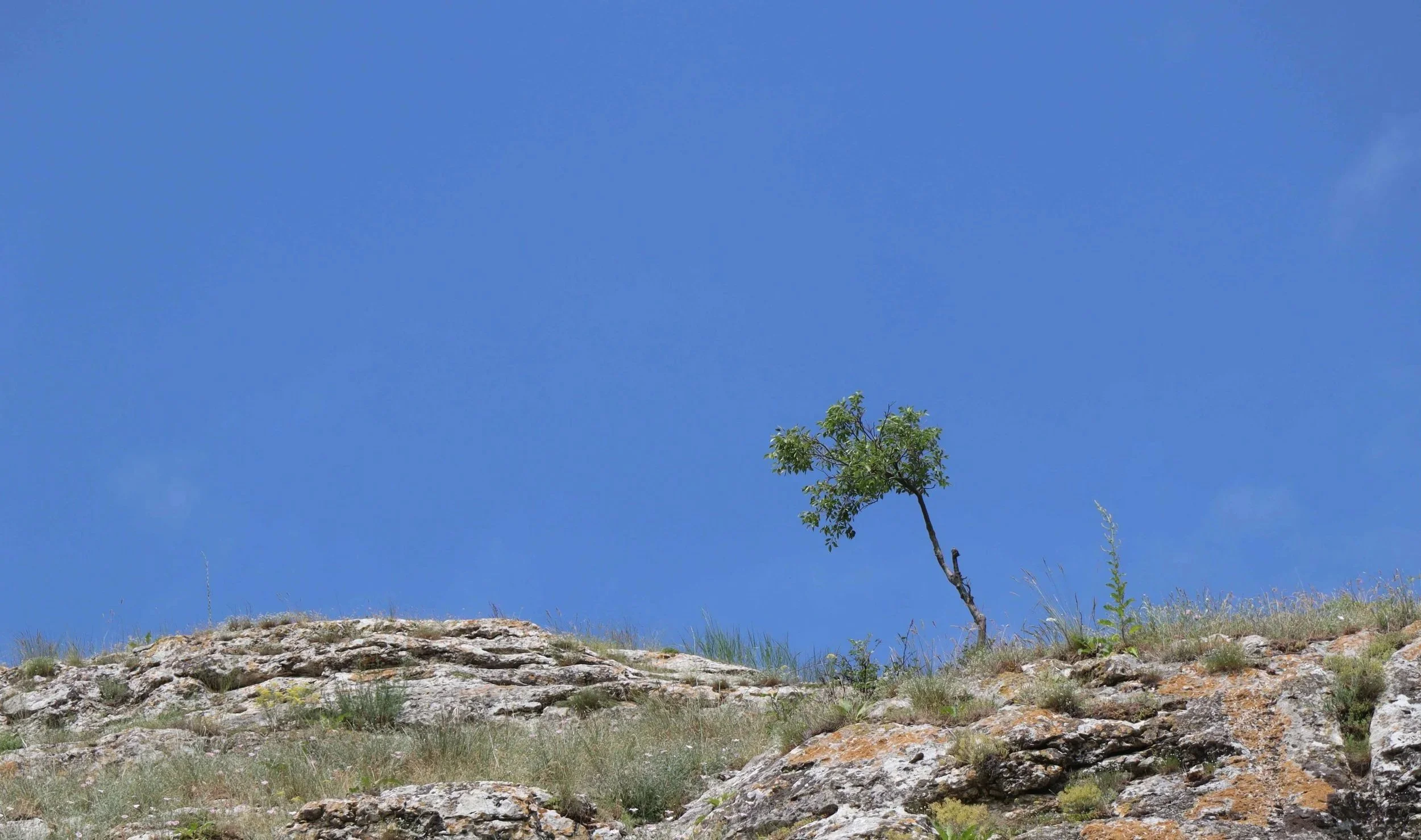
After completing the piece, I felt a strong desire to bring the artwork back to the space that birthed it. I took the canvas and returned to the barren cliffs where I first encountered the bee-eaters.
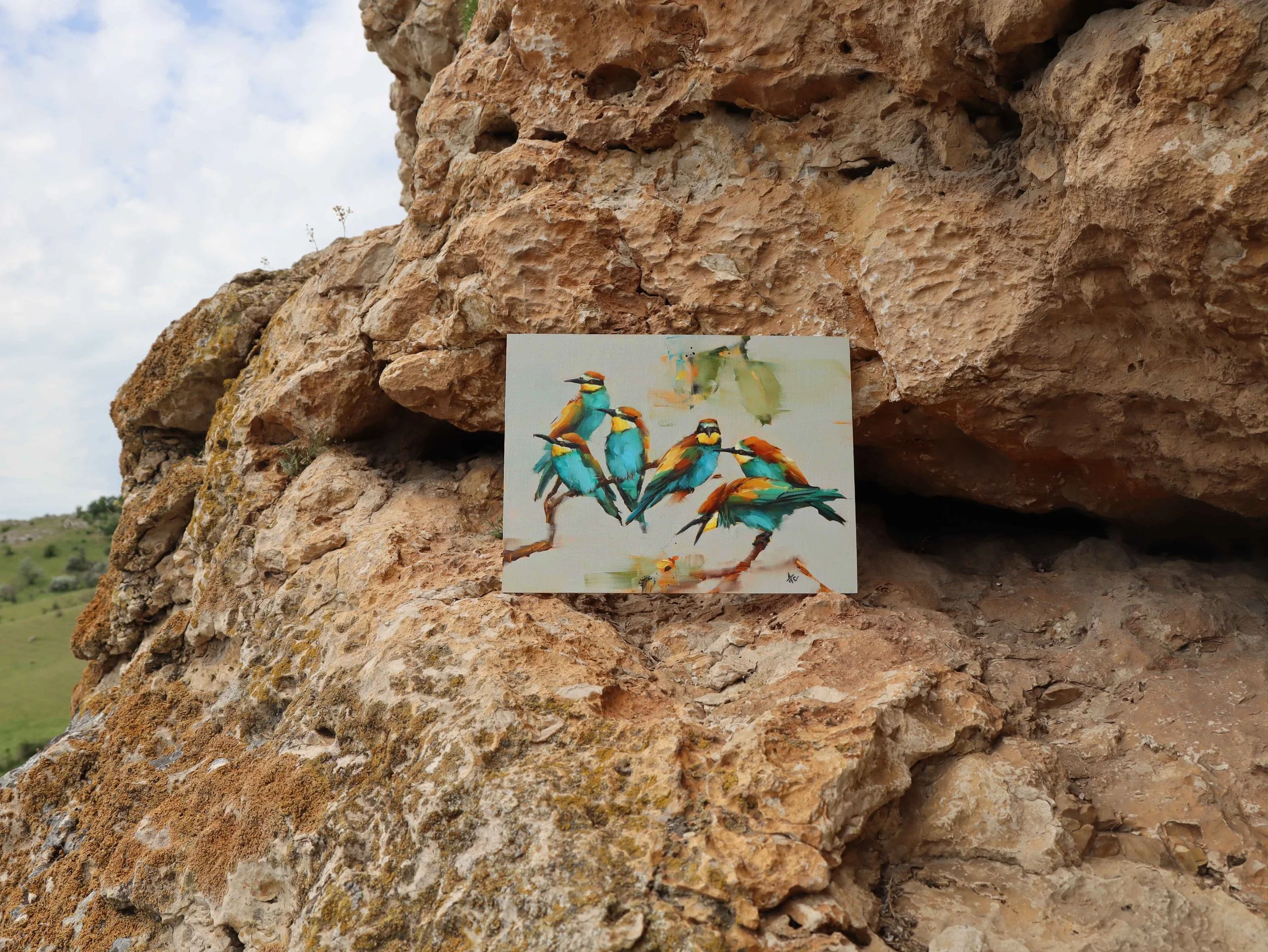
Photographing the painting there, resting against the raw, sun-beaten stone, felt like closing a sacred circle. The rough texture of the rocks entered into a direct dialogue with the rich, alla prima paint marks on the canvas, proving that art and nature will always remain intertwined.
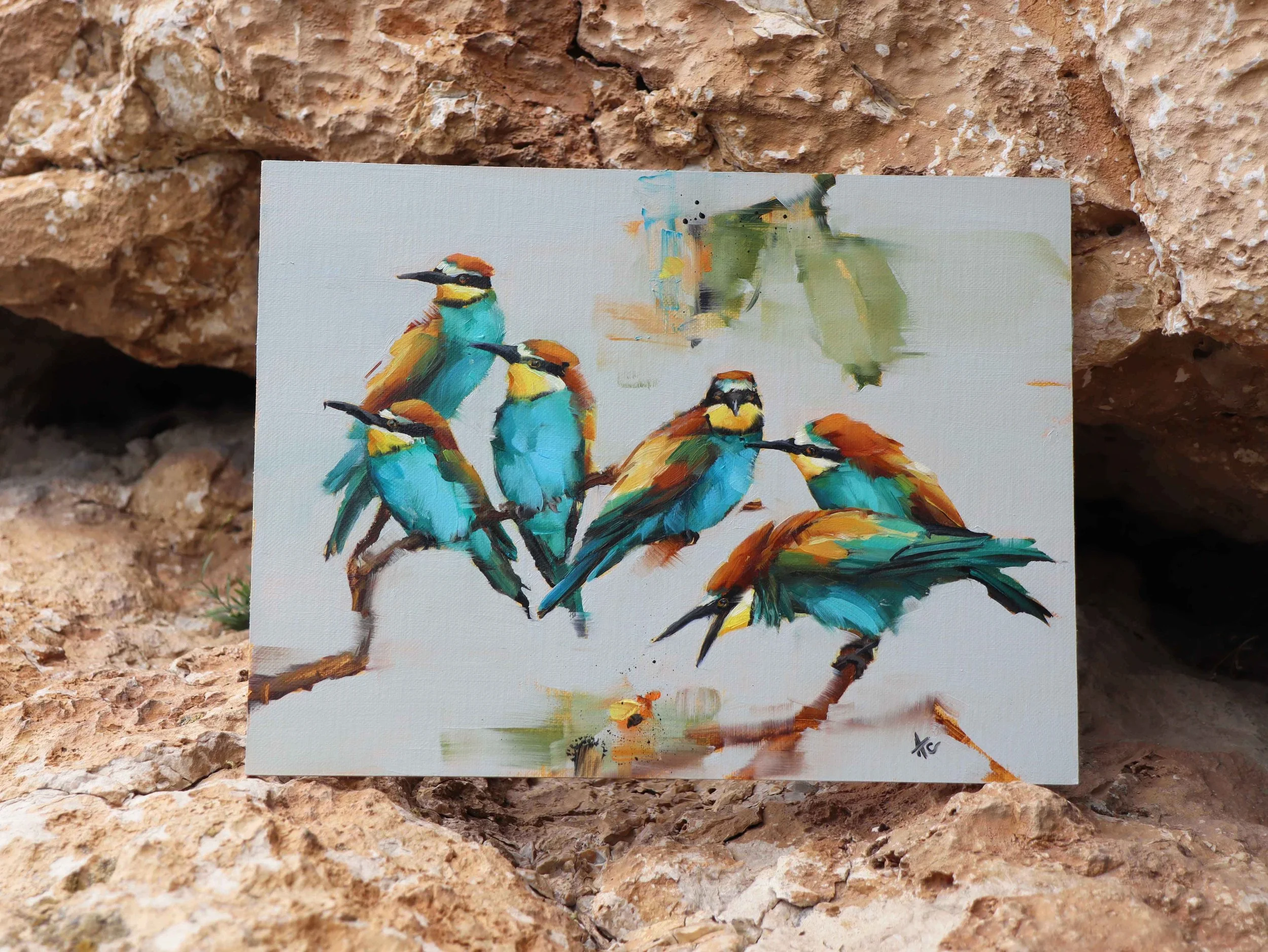
I invite you to look at this piece not merely as a representation of birds, but as a window into that absolute stillness we only find when we dare to be truly alone with the wild.